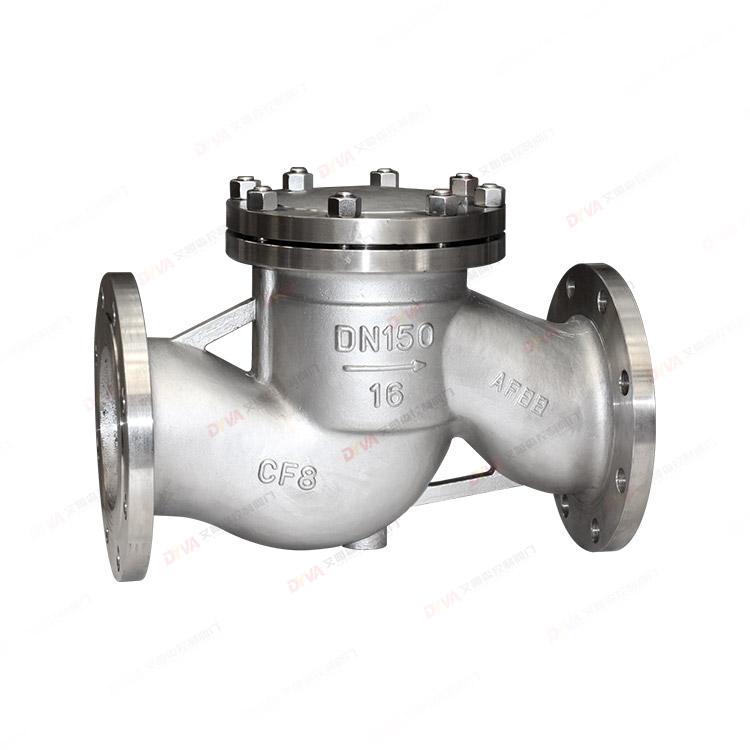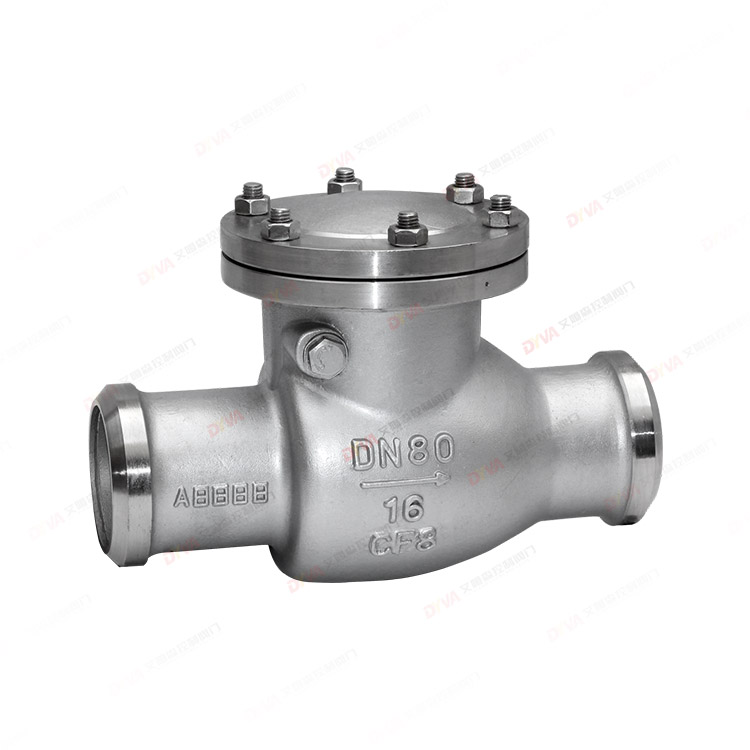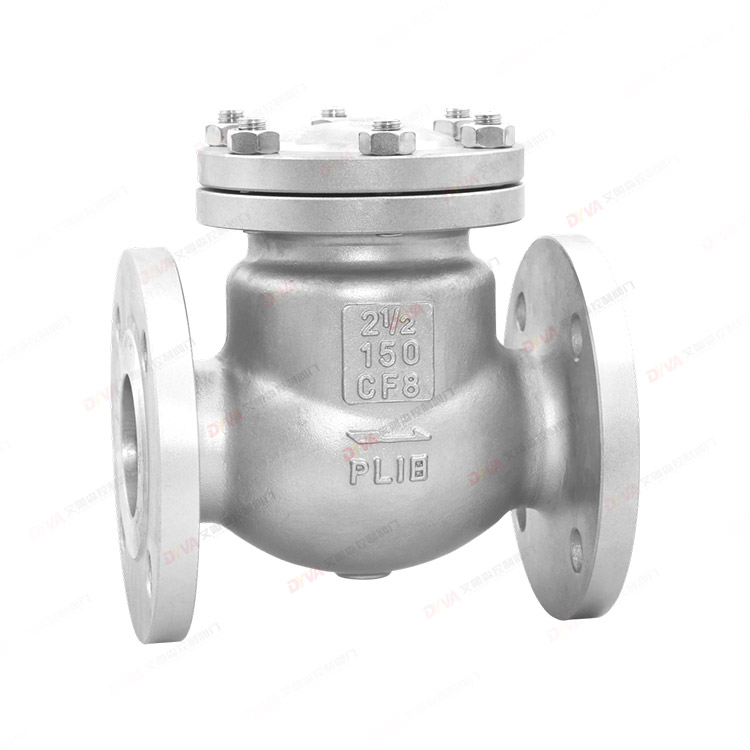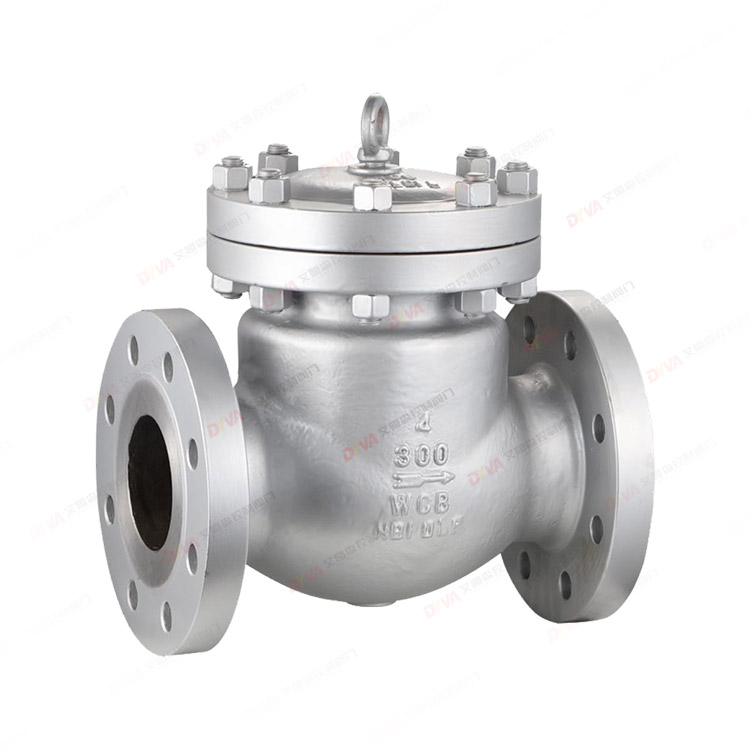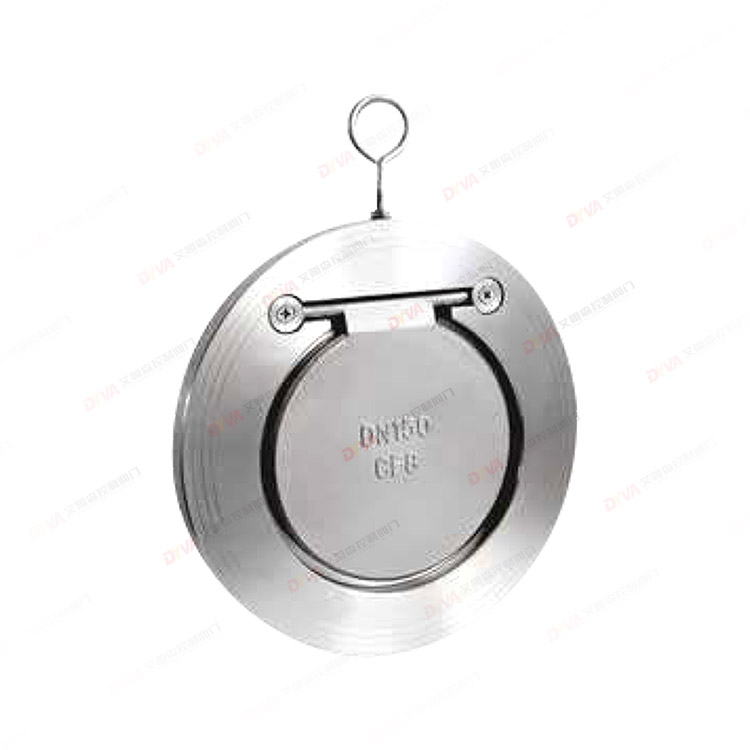
Wafer check valve

Overview: 

 The clamp check valve, also known as the counterflow valve, check valve or one-way valve, is a one-way flow control valve with a clamp connection (both ends of the valve body cannot be lanted, and it is directly clamped between the two flanges of the pipe through bolts). The core function is to rely on the medium's own pressure to drive the valve core to open, prevent the reverse flow of the medium, and prevent the pipeline Equipment damage (such as pump reversal, container backfilling), pressure fluctuation (such as water hammer) and other problems caused by the backflow of the system. With compact structure, light weight and small installation space, it is widely used in medium and low-voltage pipeline systems in water supply and drainage, HVAC, petrochemical, electricity and other industries, especially suitable for scenarios where space is limited or installation needs to be simplified. 


 Nominal pressure: PN1.0-16.0MPa 

 Suitable media: water, steam, oil and corrosive liquids 

 Applicable temperature: -196℃ to 540℃ 

 Valve body material: WCB, CF8(304) and other alloys


Products and services that meet fluid control requirements

Each process, each facility, and each environmental constraint has its own special requirements. Therefore, Dongyan offers a comprehensive range of products covering different performance levels, pressures, different functions and different materials.


Detail

Precautions for use and maintenance 

 1. Installation specifications: 

 Install strictly according to the "forward arrow" marked by the valve body to ensure that the medium flow is consistent with the arrow. Reverse installation will cause the valve to fail (unable to open or seal damage). 

 During installation, it is necessary to clean up the impurities (such as welding slag and rust) in the sealing surface of the pipeline flange and the valve body cavity to avoid impurities pinching between the sealing surfaces causing leakage, or jamming the valve core affecting the opening and closing. 

 The clamping bolts should be evenly tightened (tightened diagonally) to avoid the deformation of the valve body due to uneven force, which will affect the sealing performance; the bolt torque should meet the requirements of the valve manual and should not be over-tightened (to prevent the valve body from cracking). 

 2. Daily inspection and maintenance: 

 Regularly (every 3-6 months) check whether the valve is leaking (observe the interface between the valve body and the pipe flange and the core sealing surface). If leakage is found, it is necessary to stop to check whether the sealing gasket is damaged or whether the core sealing surface is worn, and replace or grind and repair it in time. 

 For the spring-type clamp check valve, it is necessary to regularly check whether the spring is rusted or fatigue deformation (such as slow closure of the valve core). If the spring fails, the spring of the same specification should be replaced in time to avoid affecting the closing speed. 

 Before restarting the system after long-term deactivation, you need to manually check whether the valve core is stuck (you can check whether the medium can pass through the pipeline exhaust valve or slightly open the front-end cut-off valve to observe whether it can pass normally). When jamming, you need to remove the valve to clean the valve core or guide sleeve. 

 3. Taboos: 

 It is strictly forbidden to use pipes containing large particle impurities (such as sewage, slurry) in the medium. The particles are easy to scratch the sealing surface or get stuck in the valve core, causing the valve to fail. 

 The clamp check valve cannot be used as a "cut-off valve" (its sealing performance is lower than that of gate valves and ball valves). It is necessary to install a cut-off valve at the front end or rear end to facilitate the maintenance of the check valve. 

 Avoid using ordinary rotary check valves in systems with frequent starts and stops (frequent opening and closing can lead to the wear of the spool hinge and shorten the life). In such scenarios, it is recommended to choose spring or lifting structures.


Product Application Scope

These devices are suitable for accurately controlling media such as gases, liquids, steam, etc., and maintaining process parameters such as pressure, flow rate, temperature, and liquid level at given values. Especially suitable for work environments where the allowable pressure difference is small and the allowable leakage is also small, and the pressure difference is not significant.

Related Products
Home
Products
Contact